

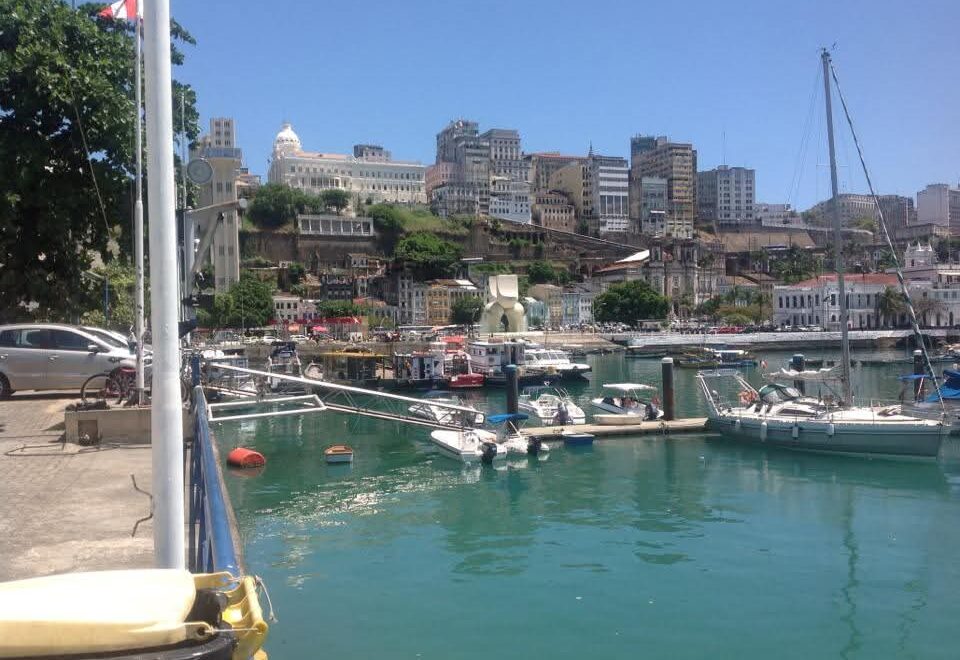
Arriving at Salvador de Bahia from the sea allows you to observe the city from a different perspective. Even before entering the urban center, you can distinguish the coastline profile, the tall buildings, the port, and the entrance to the large bay that surrounds the city.
The Baía de Todos
Entering the Baía de Todos-os-Santos is one of the most interesting moments of the navigation. From the open sea you pass into a more internal space, wide and articulated, characterized by islands, landings, and tributary rivers.
For a skipper it’s a stretch to read carefully: wind, currents, shallow waters, maritime traffic, distances, and possible anchorage areas are elements to evaluate with precision.
The bay offers shelter despite being large, the second largest in the world, but it’s not a navigation to underestimate.
It’s an important stop for telling the story of Brazil by sailboat: not just a city to reach, but a place to observe and understand from the sea as well. A little further south you can see the tourist resort of Morro de São Paulo and Gamboa.
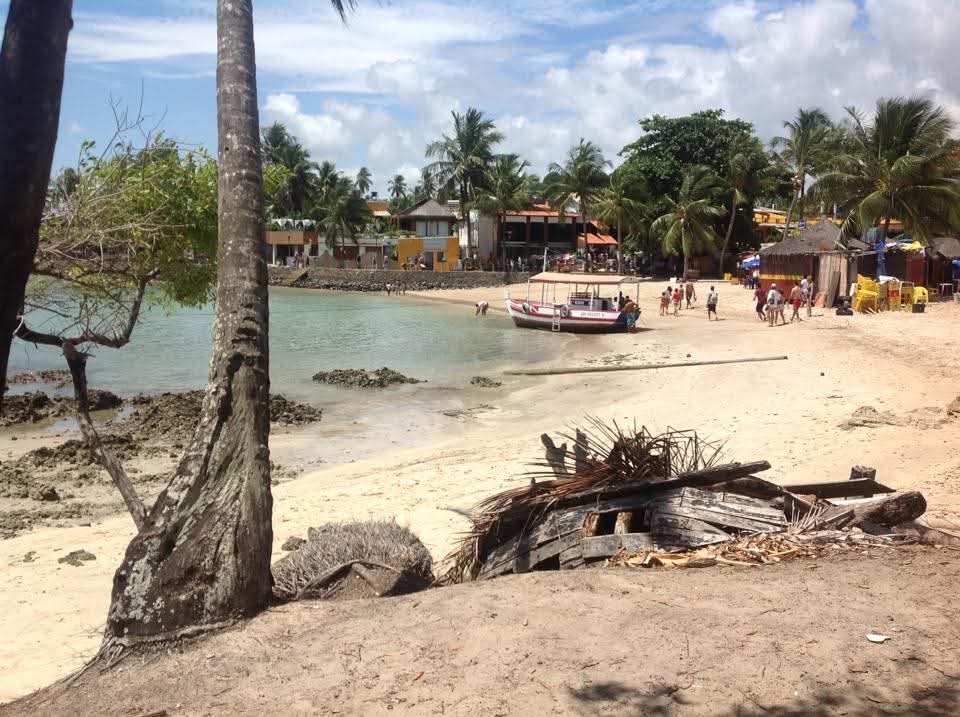
The Baía de Todos-os-Santos, located in the state of Bahia in Brazil, is one of the largest and most important bays in the world and in the country. Its name means “Bay of All Saints” and it’s famous for its natural beauty, rich biodiversity, and historical significance.
The islands of the Baía de Todos os Santos are numerous and each offers unique attractions:
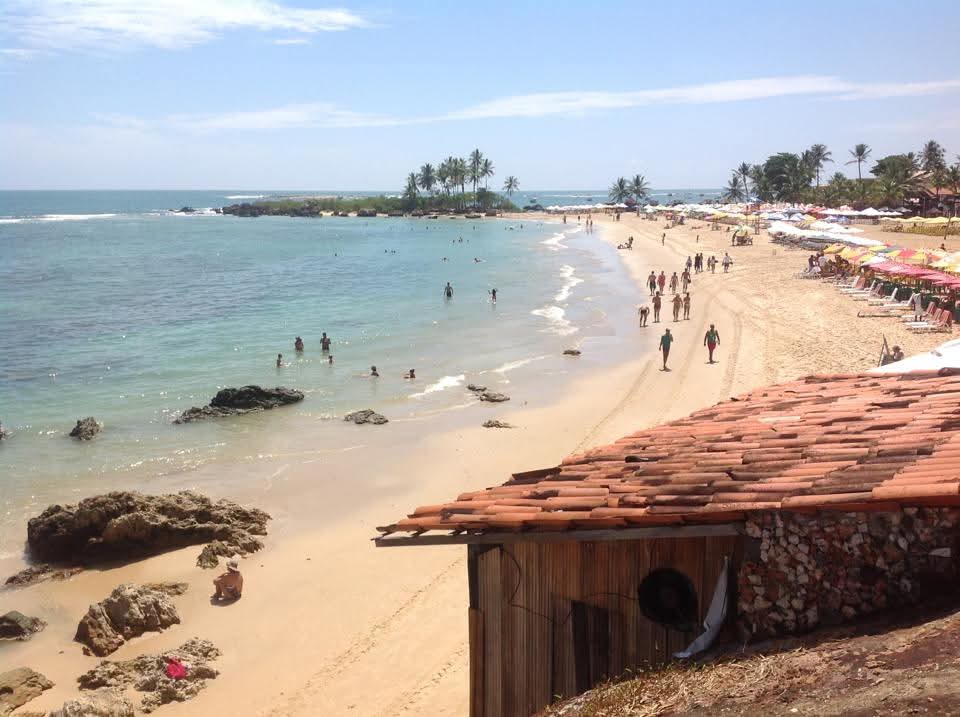
Ilha de Itaparica: The largest island in the bay, known for its sandy beaches, calm waters, and picturesque villages. It’s a popular place for tourism and offers a combination of nature, history, and local culture.
Ilha dos Frades: A smaller and quieter island, ideal for those seeking peace and unspoiled nature. Its beaches are less crowded and perfect for relaxation.
Ilha de Maré: Located near the city of Salvador, it’s characterized by a strong presence of traditional communities and lush nature.
Ilha de Bom Jesus dos Passos: Known for its scenic beauty and for some historical attractions linked to the colonial era.
The bay is also an important site for the conservation of marine fauna and coastal ecosystems, with protected areas that promote the preservation of local species. Thanks to its strategic position and its two navigable tributary rivers, the Baía de Todos os Santos has played a crucial role in the economic and cultural development of the region, serving as a natural port and meeting point between different cultures.